

Dirty lightning is a rare and visually striking phenomenon that occurs during volcanic eruptions. Unlike regular lightning that forms in thunderstorms, dirty lightning originates within a volcanic ash plume. As an eruption ejects ash, rock fragments, and gas into the atmosphere, the particles collide and generate static electricity. This separation of electrical charge can trigger lightning bolts within or around the ash cloud.
The mechanism behind dirty lightning is similar to thunderstorm lightning in that it involves charge buildup and discharge. However, instead of water droplets or ice, the charge in dirty lightning comes from volcanic ash and debris. High particle density, turbulent updrafts, and the physical properties of the ash all contribute to the frequency and intensity of the lightning. Notable examples include the 2009 eruption of Mount Redoubt in Alaska and the 2010 eruption of Eyjafjallajökull in Iceland, both of which produced highly active dirty lightning displays.
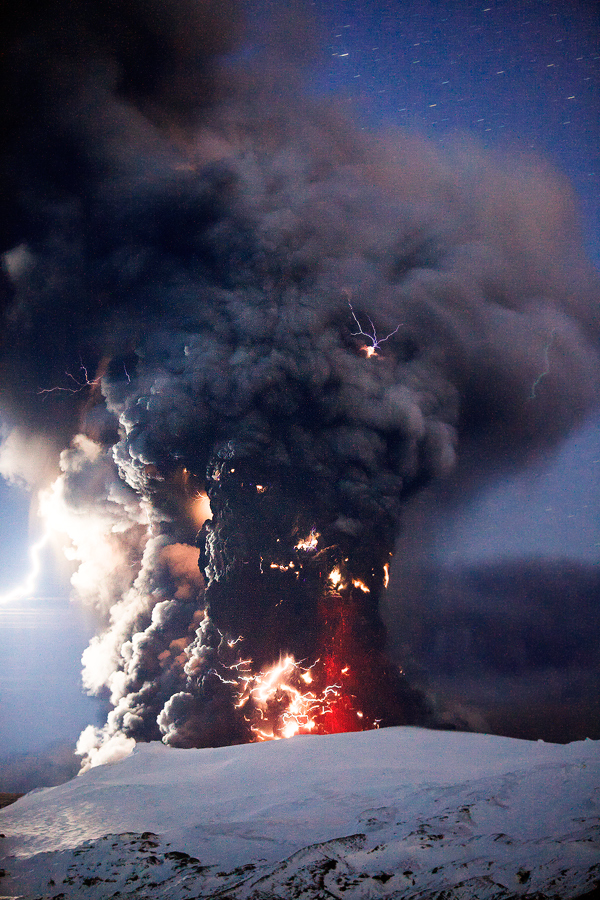
Scientists study dirty lightning to gain insight into eruption dynamics and plume development. Because lightning can be detected remotely and in real time, it serves as a valuable tool for monitoring volcanic activity—especially when direct visual observation is not possible. This information is critical for aviation safety, as volcanic ash clouds can severely damage aircraft engines and systems.
Dirty lightning, while dramatic in appearance, is a natural consequence of explosive volcanic processes. It offers a glimpse into the immense energy involved in eruptions and serves as a warning of potentially hazardous ash plumes that may not be immediately visible from the ground.
Learn more:
Leave a Reply