

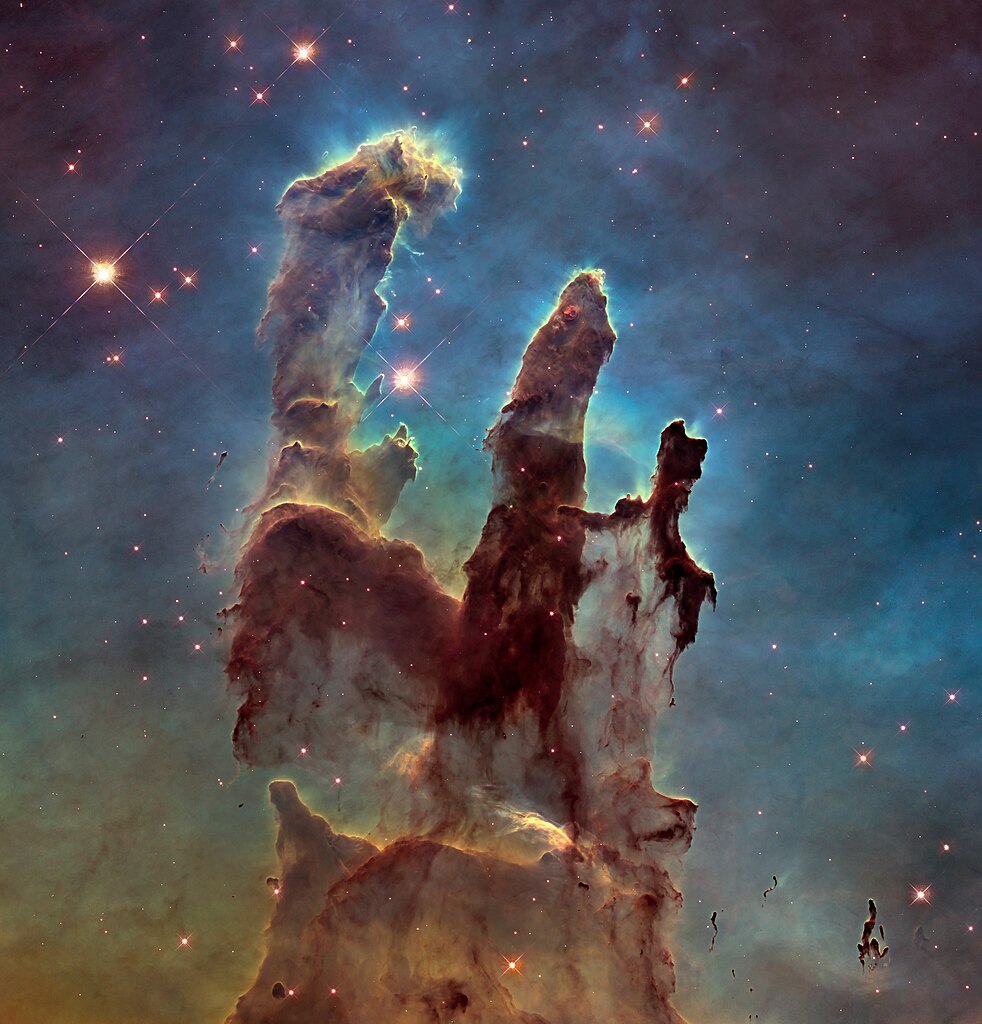
NASA, ESA, and the Hubble Heritage Team (STScI/AURA)
One of the most iconic images in space photography, the Pillars of Creation are towering columns of interstellar gas and dust located in the Eagle Nebula (also known as Messier 16, M16, or NGC 6611), about 6,500–7,000 light-years from Earth in the constellation Serpens. These vast structures, as much as several light-years tall, are active regions of star formation.
The pillars consist mainly of cool molecular hydrogen and dust, which absorb visible light, making them appear dark and opaque in optical wavelengths. At their tips, denser clumps of gas—known as evaporating gaseous globules (EGGs)—shield material behind them and are often sites where protostars are forming. The UV radiation from nearby hot stars gradually erodes the pillars, a process known as photoevaporation, which both reveals and influences star formation within.
The origin of using the name “Pillars of Creation” for these structures is not entirely clear. The phrase “Pillars of Creation” can be traced to a sermon by 19th-century Baptist preacher Charles Spurgeon, with its first use in relation to the Eagle Nebula occurring at a November 1995 press conference by NASA to promote the recently captured Hubble Space Telescope images.
In 2022, NASA released a new image of the Pillars captured by the James Webb Space Telescope using near-infrared wavelengths. This view revealed thousands of previously hidden newborn stars glowing within the columns, as infrared light can penetrate dense clouds of dust that obscure visible light.
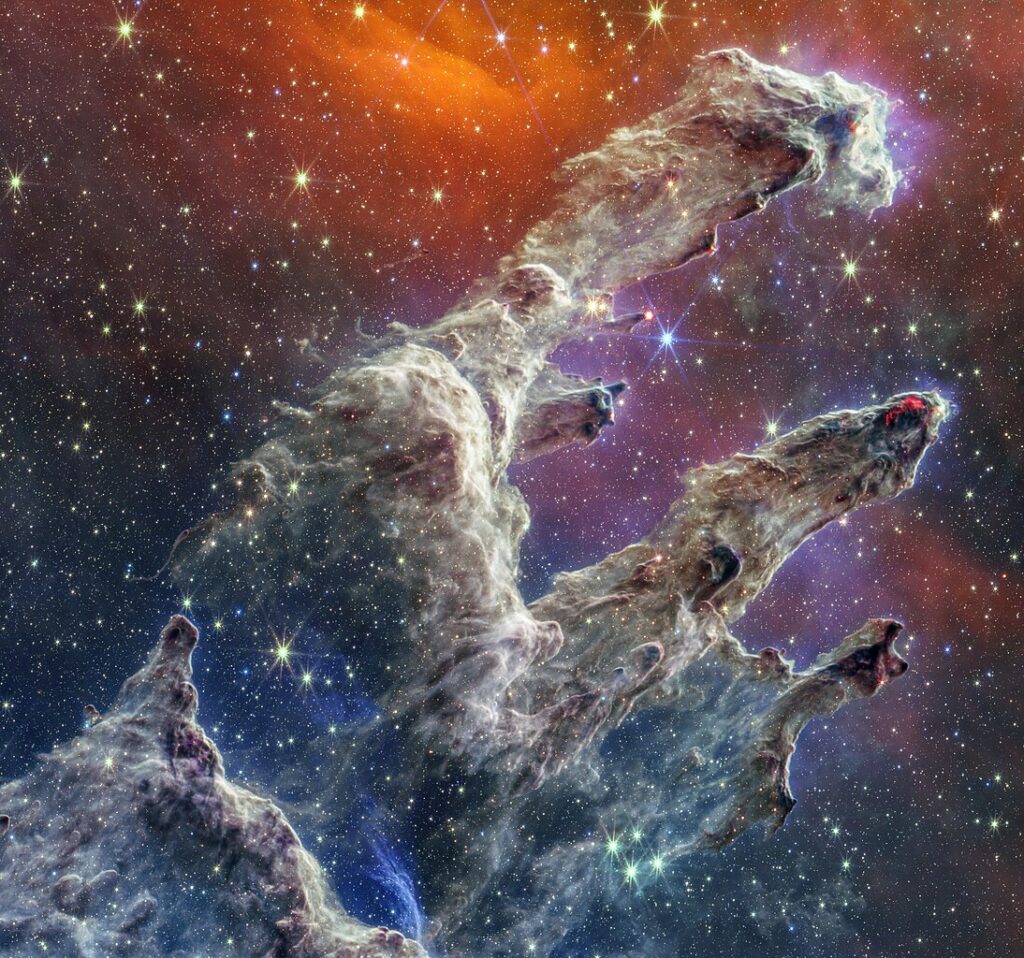
NASA, ESA, CSA, STScI, J. DePasquale, A. Pagan, A. M. Koekemoer
Though the pillars appear serene, astronomers believe they may have already been disrupted by a supernova that occurred thousands of years ago, the light of which has not yet reached Earth. The original structures we see today may already be gone, making the Pillars of Creation a snapshot of a fleeting cosmic moment frozen in light traveling across space and time.
NASA, ESA/Hubble, and the Hubble Heritage Team
Learn more:
Leave a Reply