

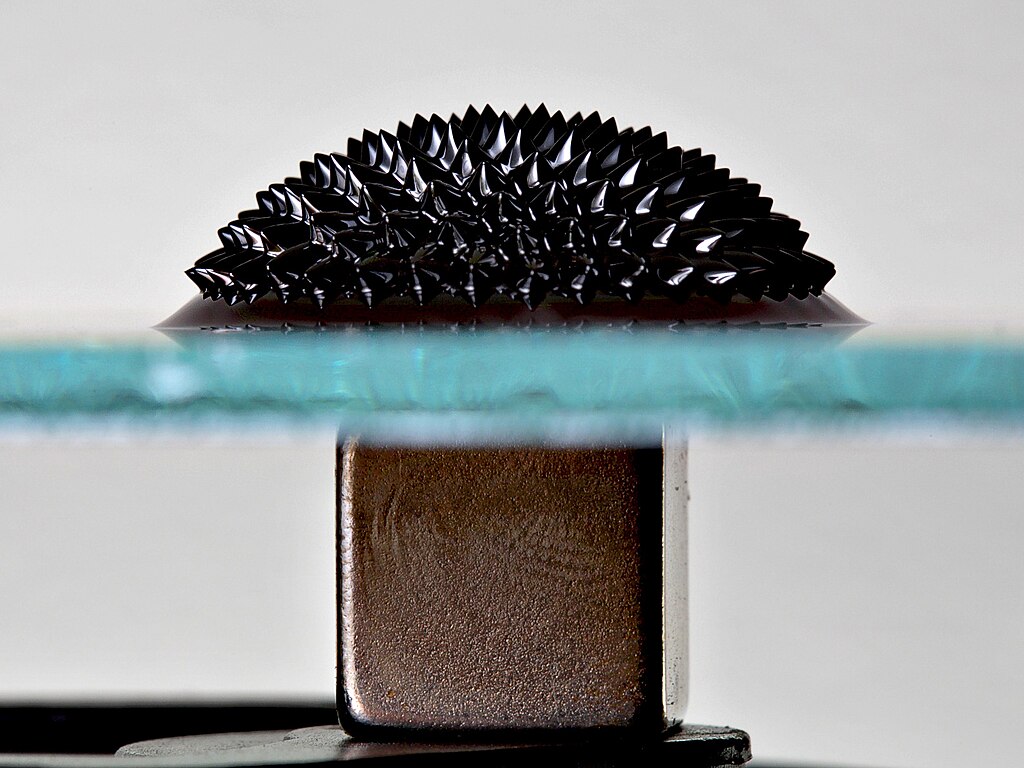
Photo by Gregory F. Maxwell, CC BY-SA 3.0
Ferrofluid is a striking substance that behaves like a liquid yet reacts dramatically to magnetic fields. Composed of nanoscale ferromagnetic particles suspended in a carrier fluid (often oil or water), ferrofluid becomes magnetized in the presence of a magnetic field. This results in a mesmerizing display of spikes and patterns that align with the field’s lines of force. Originally developed by NASA in the 1960s for use in zero-gravity fuel systems, its unique properties have since found a wide range of applications.
What makes ferrofluid particularly fascinating is its blend of solid and liquid behavior. When no magnetic field is present, it flows freely like any other liquid. But when exposed to a magnet, it stiffens and forms sharp, structured peaks. These formations are the result of the magnetic particles aligning with the field, creating visible contours of invisible forces. This responsiveness gives it both scientific and artistic value, captivating researchers and designers alike.
In practical terms, ferrofluid is used in various industries, including electronics, medicine, and mechanical engineering. It’s commonly used to seal rotating shafts in hard drives and other equipment where dust contamination must be minimized. It also plays a role in targeted drug delivery systems and as a contrast agent in certain types of medical imaging. Its ability to convert magnetic energy into mechanical motion has also opened experimental avenues in robotics and soft actuators.
Beyond its technical uses, ferrofluid has gained popularity as a visual and educational tool. Science centers and classrooms often feature ferrofluid to demonstrate magnetic fields in a vivid, hands-on way. Artists and designers have also explored its aesthetic appeal in kinetic sculptures and installations. Its hypnotic motion and responsiveness continue to make ferrofluid a compelling intersection of physics, chemistry, and visual wonder.
Learn more:
Leave a Reply