

Video by Els van den Eijnden / Caters Clips on YouTube
- What Are Feather Stars?
- Anatomy and Feeding Strategy
- Habitat and Behavior
- Reproduction and Life Cycle
- Further Reading
What Are Feather Stars?
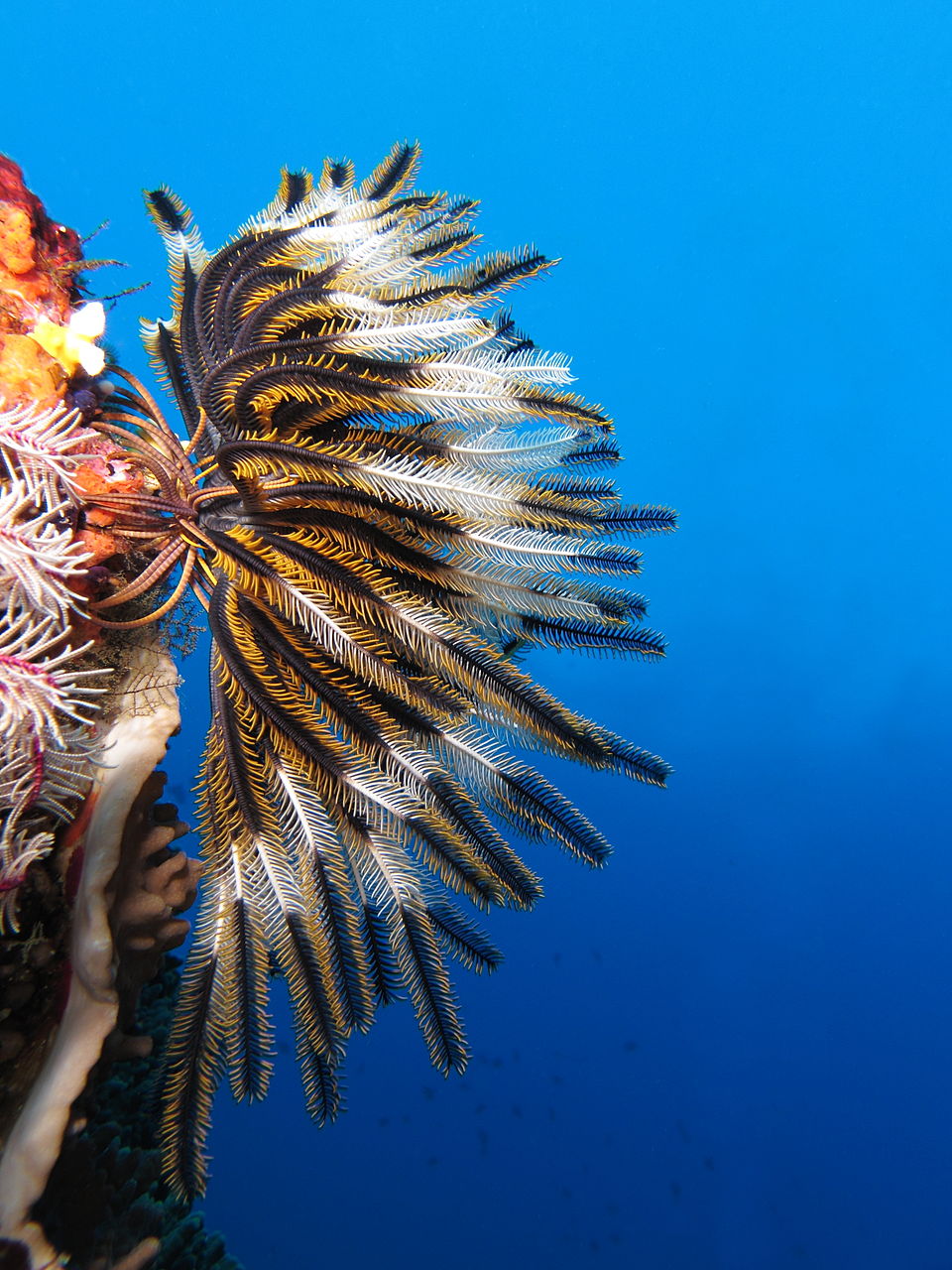
Feather stars are striking marine invertebrates in the class Crinoidea, related to starfish and sea urchins. As free‑living comatulid crinoids, they shed the stalk that anchors sea lilies and use claw‑like cirri to grip surfaces or swim in open water. Their name derives from the graceful, feathery arms that radiate from a central cup, which they use for both locomotion and passive filter‑feeding on plankton and organic particles.
Anatomy and Feeding Strategy of Feather Stars
Each feather star can have 5 to over 50 arms, which often branch into smaller “feathers” called pinnules. Along these pinnules, tube feet capture plankton and organic particles drifting by. Cilia then sweep the trapped food along slim grooves toward the mouth at the center of the cup. This passive filter‑feeding system maximises surface area for efficient nutrient capture.

Habitat and Behavior of Feather Stars
Feather stars inhabit a broad range of marine settings—from shallow tropical reefs and temperate seagrass meadows to the deep sea beyond 5,000 m. After metamorphosis, juveniles detach from their stalk and gain mobility. They crawl using their arms and cirri, and some species can swim short distances by rhythmically waving their arms. When at rest, they coil their arms protectively and anchor themselves in crevices or on overhangs.
Reproduction and Life Cycle of Feather Stars
During spawning events, adults release eggs and sperm from specialized arm structures into the water column, where fertilization happens externally. The fertilized eggs develop into free‑swimming larvae that drift with currents until they settle on the seabed. There, each larva attaches via a temporary stalk and transforms into a juvenile. Once the stalk is shed, the young crinoid becomes a mobile adult—ready to feed, move, and join the next spawning cycle.
Leave a Reply